Disclaimer
This article is for general informational purposes only and does not constitute tax advice. Tax laws change, and individual circumstances vary. Always consult with a qualified tax professional or accountant for advice specific to your situation. Information is based on ATO guidelines current at time of writing.
Tax time in Australia brings many questions about what you can and can't claim as a deduction. One question that comes up frequently is whether you can claim laundry expenses — specifically, the cost of washing, drying, and ironing your work clothes. The answer is: yes, in many cases, but there are specific rules you need to follow.
The Basics: What the ATO Says About Laundry Claims
According to the Australian Taxation Office (ATO), you can claim a deduction for the cost of laundering, dry-cleaning, or repairing certain work-related clothing. However, the key word here is "work-related." Not just any clothing qualifies.
What Clothing Qualifies for Laundry Deductions?
The ATO allows laundry deductions for the following categories of work clothing:
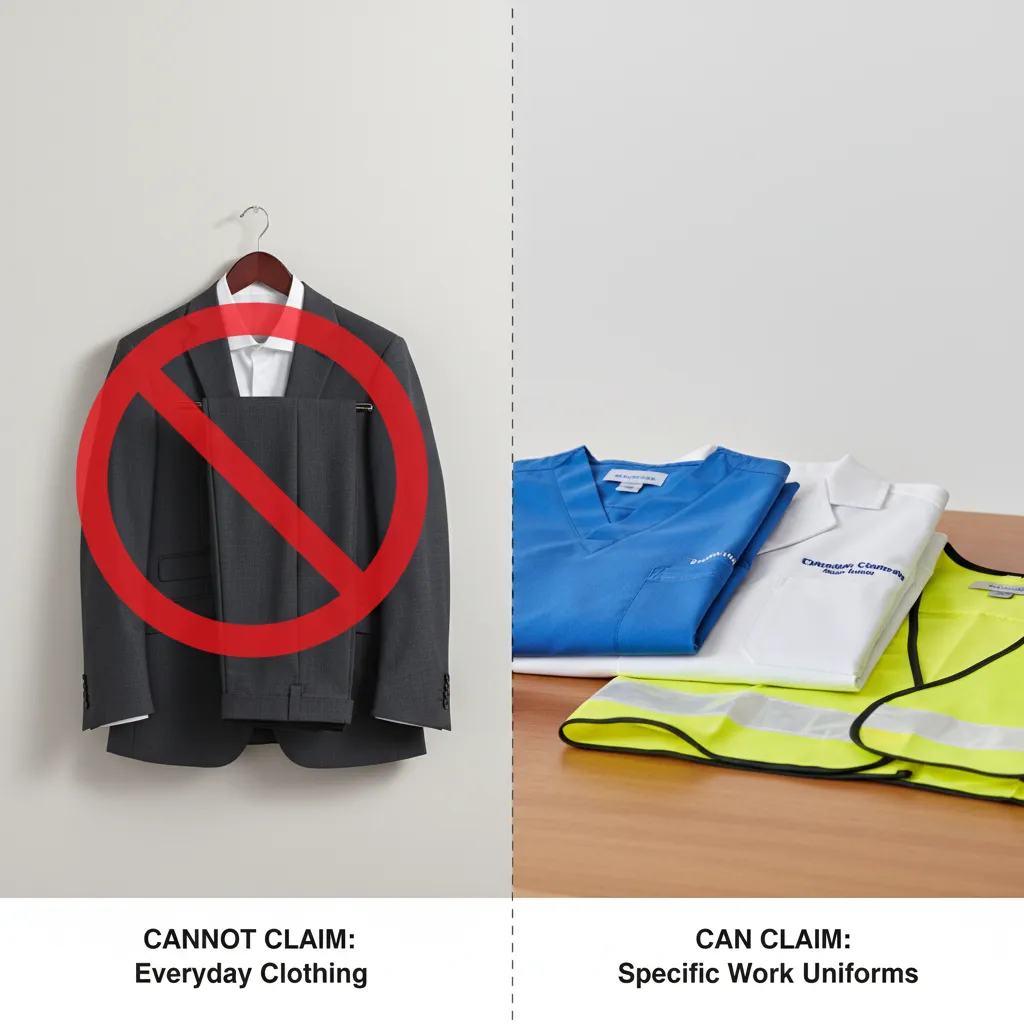
Eligible Clothing
- • Compulsory work uniforms
- • Occupation-specific clothing
- • Protective clothing
- • Registered non-compulsory uniforms
Not Eligible
- • Everyday clothes (even if worn to work)
- • Plain clothes with no logo
- • Business suits (unless occupation-specific)
- • General "smart casual" clothing
1. Compulsory Work Uniforms
A compulsory work uniform is a set of clothing that identifies you as an employee of an organisation. It must be compulsory for you to wear it while working. Examples include:
- Retail uniforms with company logos
- Healthcare scrubs provided by your employer
- Security guard uniforms
- Airline crew uniforms
2. Occupation-Specific Clothing
This refers to distinctive clothing that is specific to your profession and not suitable for everyday wear. Examples include:
- Chef's checked pants and jacket
- Barrister's robes and wigs
- Religious vestments for clergy
- Military uniforms
3. Protective Clothing
Protective clothing is designed to protect you from the risk of illness or injury at work, or to prevent you from damaging your ordinary clothes. Examples include:
- High-visibility (hi-vis) clothing
- Steel-capped boots
- Fire-resistant clothing
- Sun-protection clothing (for outdoor workers)
- Non-slip shoes for hospitality workers
4. Registered Non-Compulsory Uniforms
Your employer can register their uniform with AusIndustry. If the uniform is registered, you can claim laundry expenses even if wearing it isn't compulsory. Ask your employer if their uniform is registered.
How Much Can You Claim?
The ATO has specific rules about how to calculate and claim laundry expenses:
The $150 Threshold
If your total laundry claim is $150 or less, you can claim the expense without keeping written evidence (receipts). However, you must have actually spent the money and be able to show how you worked out your claim.
If your total laundry claim is more than $150, you need written evidence for the entire amount, such as diary entries recording your laundry expenses.

ATO Reasonable Amounts
The ATO accepts the following as "reasonable" amounts for home laundry:
| Type of Wash | Amount per Load |
|---|---|
| Load is only work clothing | $2.50 per load |
| Load is mixed (work and personal clothing) | $1.00 per load |

Using a Professional Laundry Service for Tax Claims
If you use a professional laundry service like Britawash for your work uniforms, claiming is straightforward:
- Keep your receipts: We provide itemised receipts for all services
- Claim the actual amount: You can claim the full cost of laundering eligible work clothing
- Separate work from personal: Let us know which items are work-related so we can itemise accordingly

Common Mistakes to Avoid
❌ Claiming everyday clothes worn to work
Even if you only wear certain clothes to work, if they're conventional (like a business suit or dress), they're not deductible.
❌ Claiming when your employer reimburses you
If your employer pays you a laundry allowance or reimburses your expenses, you cannot claim a deduction for the same expenses.
❌ Overclaiming without records
The ATO audits laundry claims. Make sure you can justify the number of loads and the amount you're claiming.
Record Keeping Tips
Good record-keeping is essential, especially for claims over $150. Here's what to track:
- A diary or calendar noting each time you wash work clothes
- Receipts from professional laundry services
- Records of what work clothing you own and how often you wear it
- Evidence that your uniform is compulsory or registered

Special Circumstances
Working From Home
If you work from home, you generally cannot claim laundry expenses for work clothes unless you're required to wear a specific uniform during video calls or on occasions when you attend the workplace.
Part-Time Workers
Part-time workers can still claim laundry expenses, but the claim should be proportionate to how often you actually wear the work clothing.
Multiple Uniforms or Roles
If you have multiple jobs requiring different uniforms, you can claim laundry expenses for each, but keep separate records for each employer.
Quick Reference: Can I Claim This?
| Item | Claimable? | Notes |
|---|---|---|
| Branded company polo shirt | ✅ | If compulsory or registered |
| Plain black pants worn at work | ❌ | Conventional clothing |
| Hi-vis vest and pants | ✅ | Protective clothing |
| Business suit | ❌ | Unless occupation-specific (e.g., barrister) |
| Chef's whites | ✅ | Occupation-specific |
| Non-slip kitchen shoes | ✅ | Protective footwear |
Need Itemised Receipts for Your Tax Records?
At Britawash, we provide clear, itemised receipts for all uniform and work clothing laundry services. Our documentation makes it easy to support your tax claims.
Let us take care of your work uniforms while you save time and potentially reduce your tax bill.